
A simple, honest explanation of chemotherapy — how it works, what to expect, and how to find affordable chemotherapy treatment in Chennai.
A cancer diagnosis brings a flood of new, unfamiliar words — and “chemotherapy” is usually the first one families hear. It can sound frightening, mostly because it’s misunderstood. This guide breaks chemotherapy down in plain language: what it is, how it works, what a session actually looks like, and how to plan for it without financial stress.
What Is Chemotherapy?
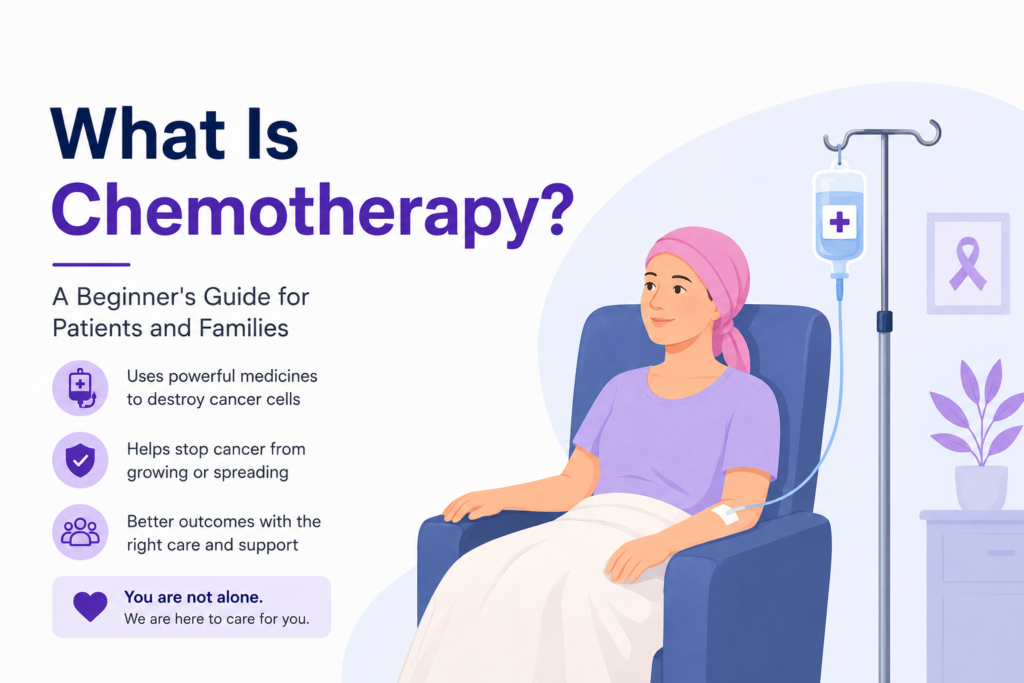
Chemotherapy (often shortened to “chemo”) is a type of cancer treatment that uses medicines to destroy cancer cells or stop them from growing and dividing. Unlike surgery, which physically removes a tumor, or radiation, which targets a specific area, chemotherapy drugs travel through the bloodstream, which means they can reach cancer cells almost anywhere in the body.
Chemotherapy is one of the oldest and most well-studied forms of cancer treatment, and it’s still a cornerstone of care for most common cancer types, including breast, lung, colon, and blood cancers.
How Does Chemotherapy Work?
Cancer cells grow and divide much faster than most healthy cells. Chemotherapy drugs are designed to target rapidly dividing cells, which is why they’re effective against tumors. This is also why chemo can affect some healthy fast-growing cells too – like hair follicles and cells lining the gut – which explains common side effects like hair loss or nausea.
Chemotherapy can be used in different ways depending on the stage and type of cancer:
- Curative chemotherapy – aims to eliminate cancer completely
- Adjuvant chemotherapy – given after surgery to kill any remaining cancer cells
- Neoadjuvant chemotherapy – given before surgery to shrink a tumor
- Palliative chemotherapy – used to relieve symptoms and improve quality of life in advanced cancer, often alongside palliative care support
What Actually Happens During a Chemotherapy Session?
For most patients, chemotherapy doesn’t require a hospital stay. At a dedicated day care chemotherapy clinic, treatment is given on an outpatient basis – meaning patients come in, receive their infusion, and go home the same day.
A typical daycare chemotherapy session includes the following:
- Pre-treatment check-up – vitals, blood work, and a quick review by the oncology team
- Infusion – chemotherapy medicine is given through an IV line, usually over 1–4 hours depending on the drug and protocol
- Monitoring – nurses observe for any immediate reaction during the session
- Recovery and discharge – most patients rest briefly and head home the same day, with clear instructions for the days ahead
Sessions are usually spaced out in cycles — for example, once every 2 or 3 weeks — to give the body time to recover between doses.
Common Side Effects (and What Helps)
Every patient responds differently, but common chemotherapy side effects include fatigue, nausea, hair loss, appetite changes, and a temporarily weaker immune system. Most side effects are temporary and manageable with supportive medication, proper nutrition, and rest. A good oncology team will prepare you for what to expect before treatment starts — not after symptoms appear.
How Much Does Chemotherapy Cost?
This is often the most stressful question for families – and one that shouldn’t be an afterthought. Chemotherapy costs vary based on the type of cancer, the specific drugs required, and the number of cycles needed. At corporate hospitals, this can be a major financial burden.
At Jus’Onco, we built our day care chemotherapy program specifically to close this gap – offering the same clinical quality with 10% to 50% lower costs than large multi-specialty hospitals and full pricing transparency before treatment begins. If you’d like a personalized breakdown, you can get a free treatment estimate before committing to a plan.
Chemotherapy vs. Other Cancer Treatments
Chemotherapy is often just one part of a larger treatment plan. Depending on the diagnosis, your oncologist may combine it with:
- Immunotherapy – helps the immune system recognize and fight cancer cells
- Targeted therapy – attacks specific genetic or molecular features of cancer cells with fewer side effects on healthy tissue
- Surgery and radiation – often used together with chemo for solid tumors
Your treatment plan should always be built around your diagnosis – not a one-size-fits-all protocol. This is why choosing the right oncology doctors and cancer specialists matters as much as the treatment itself.
Tips for Patients and Families Starting Chemotherapy
- Ask questions early – understand the goal of each cycle, expected side effects, and how progress will be measured
- Plan practically – arrange transport, time off work, and support at home for treatment days
- Prioritize nutrition and hydration – this can meaningfully reduce fatigue and nausea
- Don’t skip check-ins – regular blood work helps the team adjust treatment safely
- Lean on support – whether it’s family, a support group, or palliative and home-care services, you don’t have to manage this alone
Where to Get Affordable Chemotherapy in Chennai
If you or a loved one has been advised to start chemotherapy, the two things that matter most are trustworthy medical expertise and treatment you can actually sustain financially – because interrupted treatment due to cost is one of the biggest risks to recovery.
Jus’Onco offers low-cost chemotherapy in Chennai across two convenient locations – Kodambakkam and Anna Nagar – with transparent pricing, expert oncologists, and a day care model designed around patient comfort.