Overview
Lung cancer is one of the most common cancers in India and one of the leading causes of cancer-related deaths worldwide. It develops when abnormal cells in the lung tissue grow uncontrollably — forming tumours that interfere with normal lung function and can spread to other organs if not detected and treated early.
Lung cancer most commonly begins in the cells lining the airways. It is strongly associated with tobacco smoking — but a significant number of patients in India are non-smokers, particularly women. Early detection through low-dose CT screening in high-risk individuals dramatically improves treatment outcomes. With advances in chemotherapy, targeted therapy, immunotherapy, and radiation, many patients — even those diagnosed at advanced stages — can achieve meaningful disease control and improved quality of life.
Types of Lung Cancer
Non-Small Cell Lung Cancer (NSCLC)
NSCLC is the most common type of lung cancer — accounting for approximately 85% of all lung cancer diagnoses. It grows and spreads more slowly than small cell lung cancer and includes several subtypes.
Adenocarcinoma
Adenocarcinoma is the most common subtype of NSCLC — particularly prevalent in non-smokers and women. It begins in the mucus-secreting cells of the lungs and is often found in the outer regions of the lung.
Squamous Cell Carcinoma
Squamous cell carcinoma typically begins in the flat cells lining the airways in the centre of the lungs. It is more commonly associated with smoking and tends to grow near a main bronchus.
Large Cell Carcinoma
Large cell carcinoma can appear in any part of the lung and tends to grow and spread quickly — making early diagnosis and prompt treatment critical.
Small Cell Lung Cancer (SCLC)
SCLC is a fast-growing, aggressive form of lung cancer almost always associated with heavy smoking. It spreads rapidly to other parts of the body and typically requires immediate, intensive chemotherapy and radiation.
Lung Carcinoid Tumours
Lung carcinoid tumours are a rare, slower-growing type of lung cancer that begin in neuroendocrine cells. They are generally less aggressive than other lung cancer types and may be treated with surgery or targeted therapy.
Signs to Look for in Lung Cancer
- A persistent cough that does not go away or gets worse over time
- Coughing up blood or rust-coloured sputum
- Chest pain that worsens with deep breathing, coughing, or laughing
- Shortness of breath or wheezing
- Hoarseness or voice changes
- Unexplained weight loss or loss of appetite
- Frequent respiratory infections such as bronchitis or pneumonia
- Swelling in the face, neck, or arms
- Persistent fatigue or weakness
- Bone pain — particularly in the back or hips — in advanced cases
Treatment Options
Chemotherapy
Uses anti-cancer drugs to destroy rapidly growing lung cancer cells — used as a primary treatment for advanced stages, before surgery to shrink tumours, or after surgery to eliminate remaining cancer cells. At Jus’ Onco, lung cancer chemotherapy is delivered as a low cost day care service — patients receive their infusion and return home the same day.
Targeted Therapy
For lung cancer patients with specific genetic mutations — such as EGFR, ALK, ROS1, or BRAF — targeted therapy uses precision medicines that attack the specific molecular driver of cancer growth, with far fewer side effects than conventional chemotherapy. Biomarker testing is conducted at Jus’ Onco to confirm eligibility.
Immunotherapy
Immunotherapy uses checkpoint inhibitors to help the immune system recognize and attack lung cancer cells. It is particularly effective for patients with high PD-L1 expression and is increasingly used as a first-line treatment — either alone or in combination with chemotherapy — for advanced NSCLC.
Radiation Therapy
Radiation therapy is used to target and destroy lung cancer cells in cases where surgery is not possible, as adjuvant treatment after surgery, or to treat cancer that has spread to the brain or bones. Jus’ Onco coordinates radiation therapy referrals through its specialist oncology network.
Surgical Oncology
Surgical options for lung cancer include lobectomy, segmentectomy, or pneumonectomy — depending on the tumour location, size, and stage. Surgery is typically recommended for early-stage NSCLC and is coordinated with chemotherapy and radiation as part of a comprehensive treatment plan.
Hormone Therapy
While not a primary treatment for most lung cancers, hormone therapy may be used in specific cases where hormonal factors influence tumour growth — as part of a broader personalized treatment approach.
Supportive Care
Includes pain management, respiratory support, nutritional guidance, psycho-oncology counselling, and symptom control — maintaining quality of life and supporting treatment completion throughout the lung cancer journey.
Lung Cancer Care at Jus' Onco
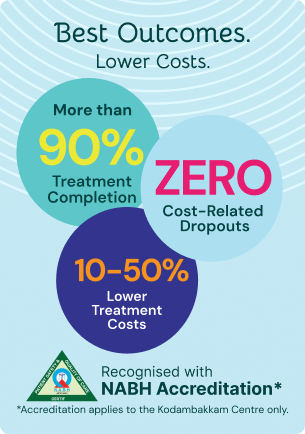
At Jus’ Onco, we provide comprehensive lung cancer care through advanced diagnostics, personalized treatment planning, and a multidisciplinary oncology team. From first consultation to long-term recovery, our focus is on delivering the best chemotherapy in India alongside targeted therapy, immunotherapy, and integrated supportive care — all at a low cost that ensures no patient is forced to delay or abandon treatment.
Our lung cancer care programme begins with a thorough review of your diagnostic reports, imaging, and biomarker test results — ensuring your treatment plan is precisely matched to your lung cancer type, genetic mutation profile, and overall health. Whether you require EGFR-targeted therapy, PD-L1-based immunotherapy, or standard platinum-based chemotherapy, Jus’ Onco designs and delivers a complete, evidence-based lung cancer treatment plan with full day care convenience and zero hidden charges.