Overview
Prostate cancer develops when abnormal cells in the prostate gland — a small walnut-sized gland in men that produces seminal fluid — grow uncontrollably, forming tumours that can invade surrounding tissue and spread to the lymph nodes, bones, and other organs if not detected and treated early.
Prostate cancer is one of the most common cancers affecting men globally and is increasingly prevalent in India — with rising incidence linked to aging populations, dietary changes, and improved detection through PSA screening. It is the second most common cancer in men worldwide after lung cancer.
Prostate cancer has a uniquely wide clinical spectrum — ranging from slow-growing, indolent tumours that may never require treatment to highly aggressive, rapidly metastasizing cancers that require immediate, intensive systemic therapy. This makes accurate risk stratification, molecular profiling, and a personalized, evidence-based treatment plan critically important for every prostate cancer patient.
Types of Prostate Cancer
Adenocarcinoma of the Prostate
Adenocarcinoma is by far the most common type of prostate cancer — accounting for more than 95% of all diagnoses. It arises from the glandular cells of the prostate and is classified by Gleason score and Grade Group — a grading system that reflects how abnormal the cancer cells look under the microscope and how aggressively the cancer is likely to behave.
Castration-Sensitive Prostate Cancer (CSPC)
Castration-sensitive prostate cancer — also called hormone-sensitive prostate cancer — responds to testosterone suppression through androgen deprivation therapy (ADT). It includes newly diagnosed metastatic disease and locally advanced disease treated with hormone therapy — often combined with chemotherapy or novel androgen receptor pathway inhibitors for improved outcomes.
Castration-Resistant Prostate Cancer (CRPC)
Castration-resistant prostate cancer progresses despite testosterone suppression to castrate levels. It is further divided into non-metastatic CRPC (nmCRPC) and metastatic CRPC (mCRPC) — each with specific approved treatment options including novel androgen receptor inhibitors, chemotherapy, PARP inhibitors, and radioligand therapy.
Small Cell Carcinoma of the Prostate
Small cell prostate carcinoma is a rare, aggressive neuroendocrine variant of prostate cancer. It does not respond to hormone therapy and requires platinum-based chemotherapy — similar to small cell lung cancer treatment. It may arise de novo or develop as a mechanism of resistance to prolonged hormone therapy.
Ductal Adenocarcinoma
Ductal adenocarcinoma is a rare subtype of prostate cancer arising from the large ducts of the prostate. It tends to be more aggressive than conventional acinar adenocarcinoma and is often diagnosed at a more advanced stage.
Transitional Cell Carcinoma of the Prostate
Transitional cell carcinoma — also called urothelial carcinoma — of the prostate arises from the transitional cells lining the prostatic urethra. It is treated with chemotherapy similar to bladder cancer treatment protocols.
Signs to Look for in Prostate Cancer
- Difficulty starting or stopping urination
- Weak or interrupted urine stream
- Frequent urination — particularly at night (nocturia)
- Painful or burning sensation during urination
- Blood in the urine (haematuria) or semen (haematospermia)
- Painful ejaculation
- Persistent pain or stiffness in the lower back, hips, pelvis, or thighs
- Erectile dysfunction — new onset or worsening
- Unexplained weight loss or fatigue in advanced disease
- Bone pain — particularly in the spine, ribs, or pelvis — from bone metastases
Treatment Options
Hormone Therapy (Androgen Deprivation Therapy)
Hormone therapy — also called androgen deprivation therapy (ADT) — is the cornerstone of prostate cancer treatment for locally advanced, high-risk, and metastatic disease. It works by reducing testosterone levels — which prostate cancer cells depend on for growth. ADT is used alone or in combination with chemotherapy, novel androgen receptor inhibitors, or radiation. At Jus’ Onco, hormone therapy for prostate cancer is administered and monitored as part of a comprehensive, personalized treatment plan.
Novel Androgen Receptor Pathway Inhibitors
Next-generation androgen receptor pathway inhibitors — including enzalutamide, abiraterone acetate, apalutamide, and darolutamide — have significantly improved outcomes across all stages of advanced prostate cancer. They are used in combination with ADT for metastatic hormone-sensitive disease and as primary treatment for castration-resistant prostate cancer. Jus’ Onco reviews PSA levels, imaging, and clinical staging to determine the most appropriate agent for each patient.
Chemotherapy
Docetaxel-based chemotherapy is used for metastatic hormone-sensitive prostate cancer in combination with ADT — and as a primary treatment for metastatic castration-resistant prostate cancer. Cabazitaxel is used as a second-line option after docetaxel. At Jus’ Onco, prostate cancer chemotherapy is delivered as a low cost day care service — patients receive their infusion and return home the same day.
PARP Inhibitor Therapy
PARP inhibitors — particularly olaparib and rucaparib — are approved for metastatic castration-resistant prostate cancer in patients with BRCA1/BRCA2 or other homologous recombination repair (HRR) gene mutations. They block DNA repair in cancer cells — causing cell death — and represent a significant advance for patients with BRCA-mutated mCRPC. BRCA and HRR mutation testing is reviewed at Jus’ Onco to confirm eligibility.
Radioligand Therapy
Lutetium-177 PSMA (177Lu-PSMA-617) is a targeted radioligand therapy approved for PSMA-positive metastatic castration-resistant prostate cancer after prior taxane chemotherapy and androgen receptor pathway inhibition. It delivers targeted radiation directly to prostate cancer cells expressing PSMA. Jus’ Onco coordinates PSMA-PET imaging and radioligand therapy referrals through its specialist oncology network.
Immunotherapy
Sipuleucel-T — a prostate cancer vaccine — is approved for asymptomatic or minimally symptomatic mCRPC. Pembrolizumab is approved for MSI-high or TMB-high prostate cancers and for BRCA-mutated mCRPC in combination with olaparib. At Jus’ Onco, MSI, TMB, and BRCA status are assessed to determine immunotherapy eligibility.
Radiation Therapy
Radiation therapy — including external beam radiation therapy (EBRT) and brachytherapy — is used for localized prostate cancer as a curative option, for locally advanced disease in combination with hormone therapy, and for bone metastases as palliative treatment. Stereotactic body radiation therapy (SBRT) and radium-223 for bone metastases are also available through referral coordination at Jus’ Onco.
Targeted Therapy
Beyond androgen receptor pathway inhibitors, VEGF-targeted agents and other investigational targeted therapies are used for specific prostate cancer subtypes. At Jus’ Onco, biomarker testing guides the selection of the most appropriate targeted approach for each patient’s molecular profile.
Supportive Care
Includes bone health management (denosumab, zoledronic acid for bone metastases), pain management, anaemia treatment, nutritional support, sexual health counselling, psycho-oncology support, and symptom control — maintaining quality of life throughout the full prostate cancer treatment journey.
Prostate Cancer Care at Jus' Onco
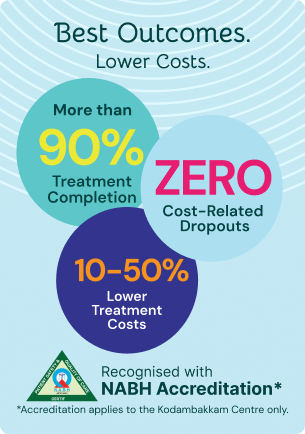
At Jus’ Onco, we provide comprehensive prostate cancer care through advanced diagnostics, personalized treatment planning, and a multidisciplinary oncology team. From first consultation through recovery and long-term follow-up, our focus is on delivering the best chemotherapy in India alongside hormone therapy, novel androgen receptor inhibitors, PARP inhibitors, radioligand therapy coordination, and integrated supportive care — all at a low cost that ensures no patient is forced to delay or abandon treatment.
Our prostate cancer care programme begins with a thorough review of your diagnostic reports, PSA levels and trends, imaging (CT, MRI, bone scan, PSMA-PET), biopsy and pathology reports, Gleason score and Grade Group classification, and comprehensive biomarker testing — including BRCA1/BRCA2 and HRR gene mutation status, MSI status, TMB assessment, and PSMA expression — ensuring your treatment plan is precisely matched to your prostate cancer stage, risk stratification, and molecular profile.