

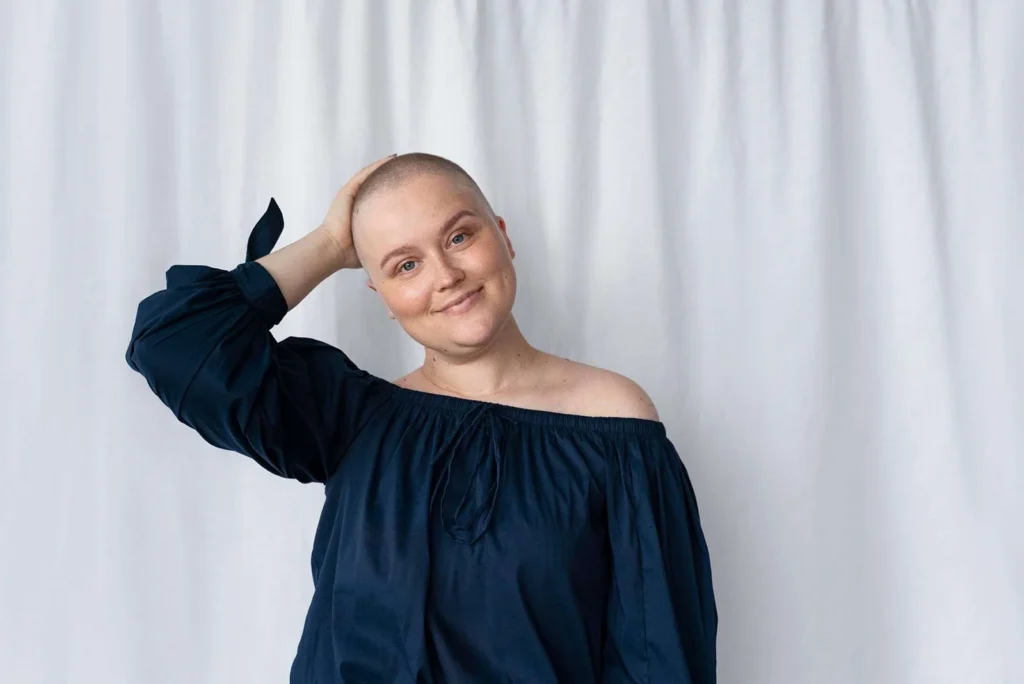
Chemotherapy drugs are designed to target and kill rapidly dividing cells, such as cancer cells. Unfortunately, they can also affect other rapidly dividing cells in the body, including those in the hair follicles. This interference with the hair follicles’ growth cycle is what leads to chemotherapy-induced hair loss, also known as alopecia.
Chemotherapy drugs disrupt the normal process of hair growth by:
- Inhibiting Cell Division: Chemotherapy drugs interfere with the division of cells in the hair follicles, which are responsible for producing new hair strands. As a result, hair growth is disrupted.
- Inducing Apoptosis: Some chemotherapy drugs trigger programmed cell death (apoptosis) in hair follicle cells, leading to hair loss.
- Affecting Hair Follicle Structure: Chemotherapy can damage the structure of the hair follicles, making them unable to produce healthy hair strands.
The extent of hair loss can vary depending on several factors, including the type and dosage of chemotherapy drugs used, the duration of treatment, and individual differences in hair growth patterns and sensitivity to the drugs.
Hair loss due to chemotherapy is usually temporary. In most cases, hair begins to grow back once chemotherapy treatment is completed. However, it may take several weeks to months for hair regrowth to become noticeable, and the texture or color of the regrown hair may be different from before. In some cases, hair may not fully return to its pretreatment state.
How long does it take to lose your hair during chemotherapy?
The timeline for chemotherapy-induced hair loss can vary from person to person and depends on several factors, including the specific chemotherapy drugs used, the dosage and frequency of treatment, and individual differences in hair growth patterns and sensitivity to the drugs. Generally, hair loss typically begins within a few weeks of starting chemotherapy.
Here’s a rough timeline:
- First Few Weeks: Many people start to notice hair shedding within the first few weeks of starting chemotherapy. This shedding can be gradual or more sudden, depending on the drugs and individual response.
- First Month: By the end of the first month of treatment, significant hair loss may occur. This can manifest as thinning of the hair, noticeable scalp visibility, or clumps of hair falling out.
- Following Months: Hair loss usually continues throughout the course of chemotherapy treatment. The extent and rate of hair loss can vary during this time.
It’s important to note that not all chemotherapy drugs cause hair loss, and even among drugs that commonly lead to hair loss, individual responses can vary. Some people may experience partial hair loss, while others may lose most or all of their hair.
Additionally, hair loss due to chemotherapy is usually temporary. After completing chemotherapy treatment, hair typically begins to grow back. The timeline for hair regrowth can also vary, but in general, new hair growth may start within a few weeks to months after the end of treatment. However, it may take several months for hair to fully regrow, and the texture or color of the regrown hair may be different from before treatment.
When does hair grow back after chemotherapy?
Hair regrowth after chemotherapy can vary from person to person and depends on several factors, including the specific chemotherapy drugs used, the dosage and duration of treatment, and individual differences in hair growth patterns and metabolism.
In general, hair regrowth typically begins within a few weeks to months after completing chemotherapy treatment. Here’s a rough timeline:
- Initial Regrowth: Some individuals may notice initial signs of hair regrowth within a few weeks after the completion of chemotherapy. This can manifest as fine, soft hair growth, often referred to as “peach fuzz.”
- Visible Growth: Within a few months after treatment, hair regrowth becomes more noticeable. The length and thickness of the regrown hair may vary, but it often appears sparse or uneven at first.
- Six Months to One Year: Hair continues to grow and thicken over the subsequent months. By six months to one year after completing chemotherapy, many individuals experience significant improvement in hair coverage and texture.
- Full Regrowth: It may take up to one to two years or longer for hair to fully regrow to its pre-treatment length and thickness. During this time, the texture or color of the regrown hair may be different from before treatment. Some people may also notice changes in their hair’s texture or curl pattern.
It’s important to note that the timeline for hair regrowth can vary widely among individuals, and patience is often required. Additionally, not all individuals experience complete regrowth, and in some cases, hair may not return to its pretreatment state.
If hair regrowth seems delayed or if there are concerns about the process, it’s advisable to consult with a healthcare provider or oncologist for guidance and reassurance.