
Cancer treatment used to mean a fairly uniform approach: attack all fast-growing cells and hope the cancer cells take more damage than the healthy ones. Targeted therapy changed that. Instead of a broad attack, it goes after the specific genes, proteins, or mutations that are actually driving a particular cancer’s growth — which is why it’s often called precision medicine.
If your oncologist has mentioned targeted therapy as an option, here’s what it means, how it works, and who tends to be a good candidate.
How Targeted Therapy Works
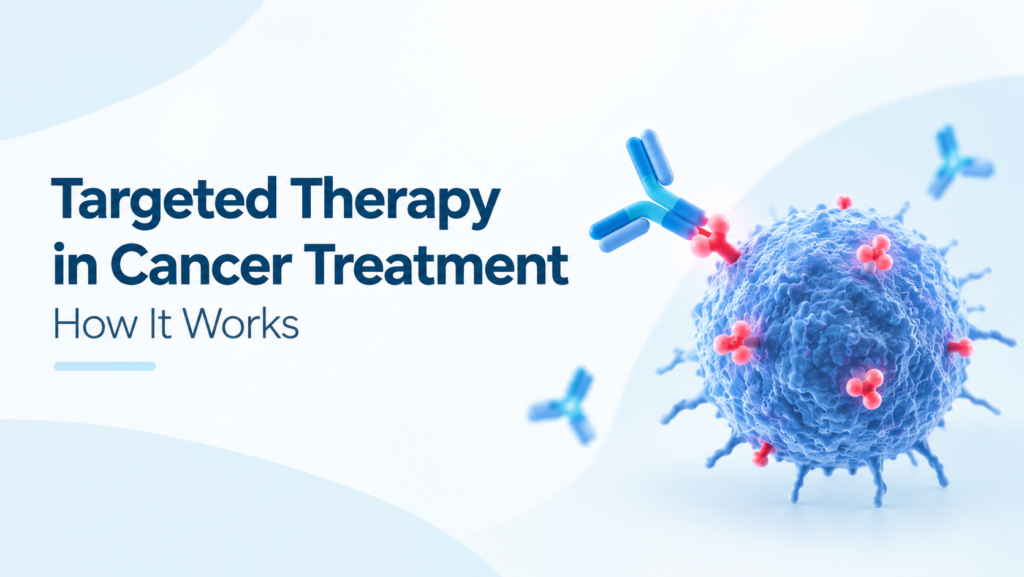
Cancer cells develop unique changes as they grow — mutations, extra proteins, or altered genes that help them divide faster and survive. These same changes can also become a weak spot. Targeted therapy drugs are designed to identify and attack that specific weak spot, blocking the signals or proteins the cancer cell depends on to grow, while largely sparing normal, healthy cells.
There are two broad categories:
- Small-molecule drugs are small enough to enter a cancer cell directly. Once inside, they block the specific protein or pathway the cell needs to survive.
- Monoclonal antibodies (large-molecule drugs) are lab-made proteins that attach to targets on the outside of a cancer cell. Some block the cell’s growth signals directly; others act as delivery vehicles, carrying chemotherapy or radioactive material straight to the tumor.
Within these categories, treatments are also grouped by what they target — including EGFR inhibitors, angiogenesis inhibitors that cut off a tumor’s blood supply, hormone therapies that block hormones like estrogen from fueling certain cancers, and PARP inhibitors that stop cancer cells from repairing their own DNA.
You can read more about how this fits alongside our broader oncology consultation process, where your care team determines which approach is right for your diagnosis.
Targeted Therapy vs. Chemotherapy vs. Immunotherapy
It’s easy to lump these together, but each works differently:
- Chemotherapy attacks any fast-dividing cell, cancerous or healthy — which is why side effects like hair loss and nausea are common.
- Targeted therapy goes after specific molecular features of the cancer cell itself, generally causing fewer of those broad side effects, though it can still cause its own set of reactions depending on the target.
- Immunotherapy works differently again — it boosts your own immune system’s ability to recognize and destroy cancer cells rather than attacking the tumor directly. You can learn more in our post on what immunotherapy is and who may benefit from it.
In practice, these treatments are often combined. Targeted therapy alongside chemotherapy, or targeted therapy alongside immunotherapy, is common when it gives a stronger overall response than either approach alone.
Who Is a Candidate for Targeted Therapy
Targeted therapy only works if your cancer actually has the specific gene, protein, or mutation the drug is designed to act on — so it isn’t given to everyone with a given cancer type, even if they share the same diagnosis. Before starting treatment, your care team will typically test your tumor for these biomarkers through blood work, imaging, or a biopsy.
Targeted therapy is commonly used for breast, lung, and prostate cancers, and is also an option for many blood cancers, digestive system cancers, skin cancers, and cancers of the female reproductive system, among others. If biomarker testing shows your cancer has a matching target, targeted therapy may be recommended on its own or combined with other treatments. If you’re exploring treatment options for a specific diagnosis, our cancer treatment pages cover approaches by cancer type, including breast cancer and lung cancer.
What to Expect During Treatment
Targeted therapy can be given as a pill you take at home, or as an infusion delivered at a clinic — the format depends on the specific drug and your treatment plan. Some protocols run daily, others weekly or monthly, and some continue indefinitely while others have a set duration. Your oncologist will schedule regular follow-ups with blood tests, scans, or other imaging to track how well the treatment is working and adjust the plan if needed.
Because these are powerful, targeted drugs, family members and caregivers may also need to follow specific handling guidance if a patient is taking oral targeted therapy at home — your care team will walk you through this as part of treatment planning.
Is Targeted Therapy Right for You?
The only way to know if targeted therapy is an option for your specific cancer is through biomarker testing and a conversation with an oncologist who can review your diagnosis in detail. At Jus’ Onco, this typically starts with an oncology consultation, where your medical history, test results, and treatment goals are reviewed before any treatment plan is finalized. Targeted therapy sessions, where appropriate, are delivered in the same safe, supervised day care setting used for chemotherapy — so there’s no hospital admission required.
Book a consultation with our oncology team to find out if targeted therapy could be part of your treatment plan.