

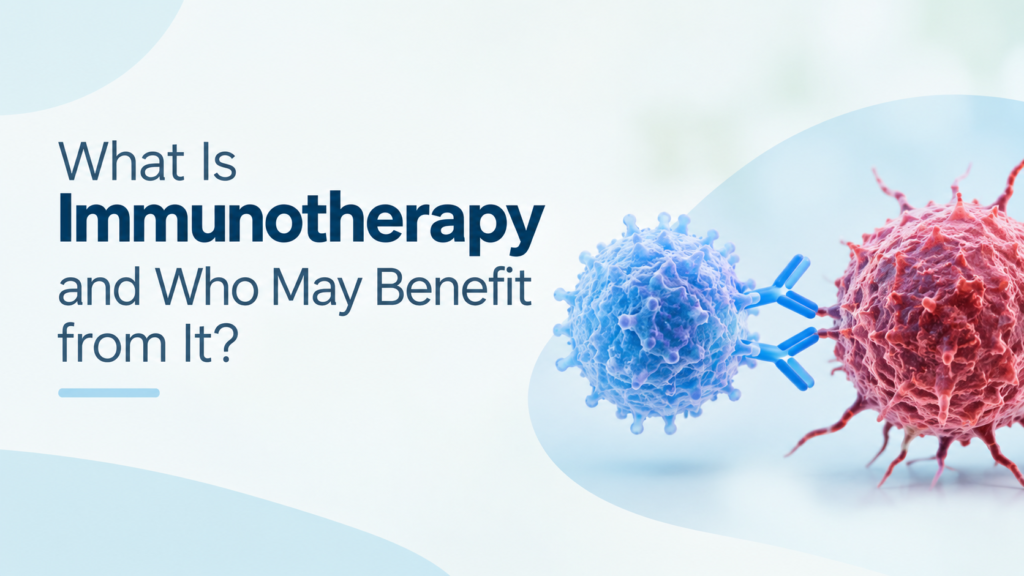
Cancer treatment has changed dramatically over the past decade, and one of the biggest reasons is immunotherapy. Rather than attacking cancer cells directly the way chemotherapy or radiation does, immunotherapy works by training the body’s own immune system to find and destroy cancer on its own. For many patients, that difference translates into fewer side effects, longer-lasting responses, and in some cases, outcomes that weren’t possible with older treatments alone.
If you or a loved one has just heard the word “immunotherapy” from your care team, here’s a plain-language breakdown of what it is, how it works, and who tends to benefit most.
How Immunotherapy Works
Your immune system is built to recognize and destroy abnormal cells, including early cancer cells. The problem is that cancer cells are clever — they develop ways to hide from the immune system or shut down the immune response before it can act. Immunotherapy essentially removes that disguise, helping your immune system see and attack the cancer the way it normally would fight an infection.
There are several different approaches, and the type used depends on your specific cancer and its biomarkers:
- Checkpoint inhibitors – These release the “brakes” that cancer cells use to hide from immune cells, allowing the immune system to recognize and attack them.
- Monoclonal antibodies – Lab-made proteins that mark cancer cells so the immune system can find them more easily.
- Adoptive cell therapies – A patient’s own immune cells are collected, modified or expanded in a lab, and reintroduced to more effectively target the cancer.
- Cancer vaccines – Designed to trigger an immune response against specific cancer-related proteins.
- Cytokine therapies – Boost the overall activity of the immune system.
- Oncolytic virus therapy – Uses modified viruses that infect and destroy cancer cells while stimulating an immune response.
Many of these approaches can also be combined with chemotherapy or radiation for a stronger overall effect. If you’re weighing treatment options, our guide on how oncologists choose a cancer treatment plan explains how these pieces typically fit together.
Why It’s Different from Traditional Treatment
Traditional chemotherapy works by directly attacking fast-growing cells — which includes cancer cells, but also some healthy cells, which is part of why chemo often causes broad side effects like hair loss or nausea. Immunotherapy, by contrast, targets cancer more selectively by working through the immune system itself. That precision is why it often comes with a different, and sometimes milder, side effect profile, though it isn’t side-effect-free — some patients experience immune-related reactions as the immune system becomes more active.
Immunotherapy is typically a systemic treatment, meaning it travels through the bloodstream. This allows it to potentially reach cancer that has spread, or metastasized, to other parts of the body — not just the original tumor site.
Who May Benefit from Immunotherapy
Immunotherapy isn’t a fit for every cancer or every patient. Whether it’s recommended usually depends on a few key factors:
- Cancer type. More than 40 immunotherapy drugs are now approved across over 30 cancer types, with especially strong results in cancers like melanoma and lung cancer. It’s a standard treatment for some cancers, an emerging option for others, and still under study in clinical trials for many more.
- Biomarkers. Even within the same cancer type, patients can have different biological markers that affect whether immunotherapy is likely to work. Testing for these biomarkers is often the first step in determining if you’re a candidate.
- Stage of disease. Immunotherapy is frequently used for advanced or metastatic cancers, particularly when other treatments haven’t been effective, though it’s increasingly being used earlier in treatment for some cancer types as well.
- Overall health. Your care team will consider your general health and how well you’re likely to tolerate treatment.
Because eligibility depends so heavily on individual biology, the only way to know for sure if immunotherapy is right for you is through testing and a conversation with your oncologist. Learn more about what to expect during your first oncology consultation.
What to Expect During Treatment
Immunotherapy can be delivered in different ways depending on the cancer and drug type, including intravenous (IV) infusions, injections under the skin, oral pills, or, in the case of certain bladder cancers, direct delivery into the bladder. Treatment schedules vary widely, and your care team will walk you through what to expect, how often you’ll need appointments, and how your response will be monitored over time.
It’s also worth knowing that response times can differ from traditional treatment. Because immunotherapy works with your immune system rather than attacking the tumor directly, it may take longer to see measurable results on scans, even when the treatment is working well.
The Bigger Picture
Immunotherapy has meaningfully shifted the cancer treatment landscape, and survival outcomes across many cancer types have improved as a result — including previously hard-to-treat advanced and metastatic cases. That said, it still only benefits a subset of patients and cancer types, and research is ongoing to expand who it can help and make it more effective across a broader range of diagnoses.
If you’re exploring immunotherapy as part of your care plan, the most important next step is a conversation with an oncologist who can review your specific diagnosis, run biomarker testing, and help you understand your options.
Schedule a consultation with our oncology team to find out if immunotherapy could be part of your treatment plan.