Soft Tissue & Bone Cancer

At Jus’ Onco, we provide comprehensive soft tissue and bone cancer diagnosis and treatment through personalized care, advanced therapies, and a multidisciplinary team dedicated to safe and compassionate care at every stage of your cancer journey.

BOOK APPOINTMENT

Get Estimate

Trusted Partner

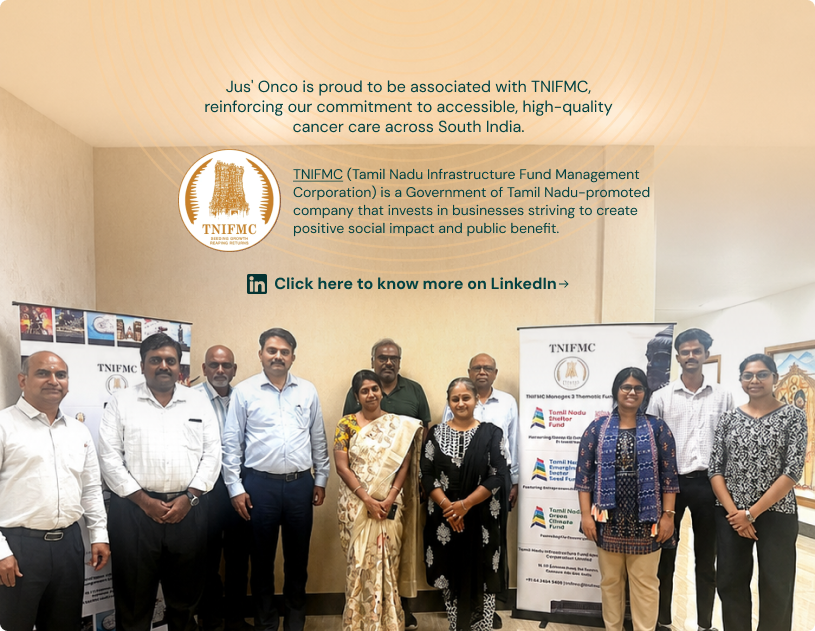
TNIFMC (Tamil Nadu Infrastructure Fund Management Corporation) is a Government of Tamil Nadu-promoted company that invests in businesses striving to create positive social impact and public benefit.

Table of Contents

Overview

Soft tissue and bone cancers — collectively known as sarcomas — are a diverse group of rare malignant tumours that arise from the connective tissues of the body. Soft tissue sarcomas develop in muscles, tendons, fat, blood vessels, nerves, and the fibrous tissues surrounding joints. Bone sarcomas arise from bone cells and the cartilage, fibrous, or vascular tissues within the bone structure.

Sarcomas can occur at any age — from young children to older adults — and can develop in virtually any part of the body. They represent less than 1% of all adult cancers but account for approximately 15% of childhood cancers — making them a critically important group of tumours requiring specialist oncology expertise.

Due to their rarity and diversity, sarcomas require highly specialized diagnosis — including expert pathological review, molecular testing, and imaging — to accurately classify the tumour subtype and design the most effective treatment plan. With advances in chemotherapy, targeted therapy, immunotherapy, and surgical oncology, many sarcoma patients can achieve meaningful disease control, long-term remission, or complete cure — particularly when diagnosed early and treated at a specialist centre.

Types of Soft Tissue & Bone Cancer

Osteosarcoma
Osteosarcoma is the most common primary bone cancer — most frequently affecting adolescents and young adults during periods of rapid bone growth. It typically arises in the long bones near the knee, shoulder, or hip. Treatment involves neoadjuvant chemotherapy followed by surgery and adjuvant chemotherapy.

Ewing Sarcoma
Ewing sarcoma is a highly malignant bone and soft tissue tumour — most common in children and young adults — typically arising in the pelvis, femur, tibia, or ribs. It is characterized by the EWSR1-FLI1 gene fusion and is treated with intensive multiagent chemotherapy, surgery, and radiation.

Chondrosarcoma
Chondrosarcoma arises from cartilage cells and is the second most common primary bone tumour — most frequently affecting adults over 40. It is generally resistant to conventional chemotherapy and radiation — making surgery the primary treatment, with targeted therapy and immunotherapy options for advanced or unresectable disease.

Giant Cell Tumour of Bone
Giant cell tumour of bone (GCTB) is a locally aggressive bone tumour arising near the ends of long bones — particularly around the knee. It can occasionally metastasize to the lungs. Treatment includes surgery and denosumab — a RANK ligand inhibitor targeted therapy.

Synovial Sarcoma
Synovial sarcoma is a soft tissue sarcoma most commonly arising near large joints — particularly the knee — in young adults. It is characterized by SS18-SSX gene fusion and is treated with surgery, chemotherapy (ifosfamide and doxorubicin), and radiation.

Liposarcoma
Liposarcoma develops from fat cells and is one of the most common soft tissue sarcomas in adults. It most frequently arises in the retroperitoneum (behind the abdominal cavity) or the thigh. Treatment involves surgery, radiation, and chemotherapy for advanced disease — with CDK4 and MDM2 inhibitors for dedifferentiated liposarcoma.

Leiomyosarcoma
Leiomyosarcoma develops from smooth muscle cells — most commonly in the uterus, retroperitoneum, or blood vessels. It is treated with surgery, chemotherapy (gemcitabine plus docetaxel or doxorubicin-based regimens), and in some cases targeted therapy.

Rhabdomyosarcoma
Rhabdomyosarcoma is the most common soft tissue sarcoma in children — arising from skeletal muscle cells. It can develop in the head and neck, genitourinary tract, or extremities. Treatment involves multiagent chemotherapy, surgery, and radiation.

Gastrointestinal Stromal Tumour (GIST)
GIST arises from the specialized interstitial cells of Cajal in the gastrointestinal tract. It is the most common mesenchymal tumour of the GI tract and is treated with imatinib targeted therapy — with second and third-line targeted options for imatinib-resistant disease.

Angiosarcoma
Angiosarcoma develops from the cells lining blood or lymph vessels and can arise in the skin, soft tissue, breast, liver, or heart. It is an aggressive tumour treated with surgery, chemotherapy (paclitaxel), and targeted therapy — with immunotherapy showing emerging benefit.

Signs to Look for in Soft Tissue & Bone Cancer

  • A painless or painful lump or swelling in soft tissue — muscles, tendons, or under the skin — that is growing or larger than 5cm
  • Bone pain — persistent, localized, or worsening at night — not explained by injury or activity
  • Swelling or tenderness near a bone or joint
  • A bone that fractures unexpectedly with minimal or no trauma — pathological fracture
  • Limited range of motion in a joint near a swelling
  • Persistent fatigue or unexplained weight loss
  • A lump that feels firm or fixed rather than soft and moveable
  • Visible swelling of an arm or leg without obvious cause
  • Neurological symptoms — numbness, tingling, or weakness — from tumour pressing on nearby nerves
  • In children — limping, refusal to use a limb, or persistent bone or joint pain that does not resolve

Treatment Options

Chemotherapy
Chemotherapy is a cornerstone of treatment for many soft tissue and bone sarcomas — used as neoadjuvant treatment before surgery to shrink tumours, as adjuvant treatment after surgery to reduce recurrence risk, or as the primary treatment for advanced or metastatic disease. Common regimens include doxorubicin plus ifosfamide for soft tissue sarcomas, and MAP (methotrexate, doxorubicin, cisplatin) or ifosfamide-based protocols for osteosarcoma. At Jus’ Onco, sarcoma chemotherapy is delivered as a low cost day care service — patients receive their infusion and return home the same day.

Targeted Therapy
Targeted therapy plays a critical role in sarcoma treatment — particularly for GIST (imatinib, sunitinib, regorafenib), dedifferentiated liposarcoma (CDK4/MDM2 inhibitors), giant cell tumour of bone (denosumab), and angiosarcoma (pazopanib). Biomarker and molecular testing is reviewed at Jus’ Onco to determine targeted therapy eligibility for each sarcoma subtype.

Immunotherapy
Immunotherapy — particularly PD-1 checkpoint inhibitors (pembrolizumab, nivolumab) — has shown activity in certain sarcoma subtypes including undifferentiated pleomorphic sarcoma, alveolar soft part sarcoma, and epithelioid sarcoma. At Jus’ Onco, PD-L1 status and tumour mutational burden are assessed to determine immunotherapy eligibility.

Radiation Therapy
Radiation therapy is used for sarcomas that cannot be completely surgically removed, as adjuvant treatment after limb-sparing surgery to reduce local recurrence risk, or as primary treatment for Ewing sarcoma in combination with chemotherapy. Jus’ Onco coordinates radiation therapy referrals through its specialist oncology network.

Surgical Oncology
Surgery is the primary treatment for most localized soft tissue and bone sarcomas — with the goal of achieving wide negative surgical margins while preserving function. Limb-sparing surgery has replaced amputation as the standard approach for most extremity sarcomas — often combined with chemotherapy and radiation. Jus’ Onco coordinates surgical oncology referrals as part of a comprehensive sarcoma treatment plan.

Supportive Care
Includes pain management, physiotherapy and rehabilitation coordination, nutritional support, psychological support for patients — particularly younger patients and families — psycho-oncology counselling, and symptom control — maintaining quality of life and supporting treatment completion throughout the full sarcoma treatment journey.

Soft Tissue & Bone Cancer Care at Jus' Onco

At Jus’ Onco, we provide comprehensive soft tissue and bone cancer care through advanced diagnostics, personalized treatment planning, and a multidisciplinary oncology team. From first consultation through recovery and long-term follow-up, our focus is on delivering the best chemotherapy in India alongside targeted therapy, immunotherapy, and integrated supportive care — all at a low cost that ensures no patient is forced to delay or abandon treatment.

Our sarcoma care programme begins with a thorough review of your diagnostic reports, imaging (MRI, CT, PET, bone scan), biopsy and expert pathological review, and comprehensive molecular testing — including KIT and PDGFRA mutation testing for GIST, EWSR1 fusion testing for Ewing sarcoma, SS18-SSX testing for synovial sarcoma, CDK4 and MDM2 amplification for liposarcoma, and PD-L1 expression — ensuring your treatment plan is precisely matched to your sarcoma subtype, grade, stage, and molecular profile.

Whether you require MAP chemotherapy for osteosarcoma, ifosfamide plus doxorubicin for soft tissue sarcoma, imatinib targeted therapy for GIST, denosumab for giant cell tumour of bone, pembrolizumab immunotherapy for eligible sarcoma subtypes, or a multimodal combination approach — Jus’ Onco designs and delivers a complete, evidence-based sarcoma treatment plan with full day care convenience, transparent pricing, and zero hidden charges.

Your Pathway to the Best Chemotherapy in India

01

Book Your Appointment

Schedule your oncology consultation online or by phone at your nearest Jus’ Onco branch — India’s trusted immunotherapy and best chemotherapy clinic.

02

Consultation & Diagnosis

Meet our cancer specialists for a thorough evaluation, biomarker testing, second opinion if needed, and a detailed discussion of your immunotherapy eligibility.

03

Personalized Treatment Plan

Receive a customized immunotherapy, targeted therapy, or chemotherapy plan — designed specifically for your cancer type, biomarker profile, and lifestyle.

04

Ongoing Care & Support

Benefit from continuous medical follow-up, digital check-ins, immune-related side effect management, and dedicated family support throughout your treatment.

How Jus' Onco Compares

Factor Jus Onco Day Care Chemotherapy Centre Corporate/ Private Hospital Government Hospitals Nursing Homes
💲Cost Affordable / Low Cost (Pay only for chemo delivery) High (Includes additional charges) 50% more to double the cost Low cost (subsidized/free) Medium to High Cost (varies by setup)
🤝Convenience Easier access & same-day discharge Admission often required Admission Mostly required Admission Mostly required
🩺Oncologist Availability Immediate Appointments required Long wait times Limited
👨‍⚕️Support Dedicated Specialized Chemotherapy nurses & doctor support General hospital staff General hospital staff General hospital staff
📋Chemotherapy Delivery Standards and Protocols High Medium Variable Low
📑Treatment Completion Adherence 90-100% in comparison to the general average of 50% High costs often lead to treatment dropouts, resulting in poorer outcomes 50% drop out Unorganized setting to collect data on adherence
🦠Infection Risk Low High High High
🏆Patient Experience Personalized care with continuous support before, during, and after treatment No end to end handholding Very impersonal Basic nursing care
🏥Environment Private and quick personalized care Crowded hospital setting Overcrowded wards Limited Infrastructure
Waiting Time Low High High Medium

Trusted Care

Mission

Empowering cancer patients through High Quality Affordable Chemotherapy and Cancer care — making expert treatment accessible to every family, regardless of income.

Transparent Pricing​

Between Aug 2024 and Jan 2025,
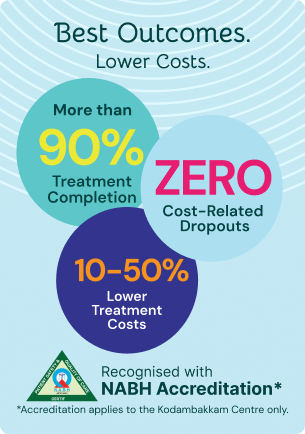
90% of our chemotherapy cycles
average ₹18,500 per cycle

Best Outcomes

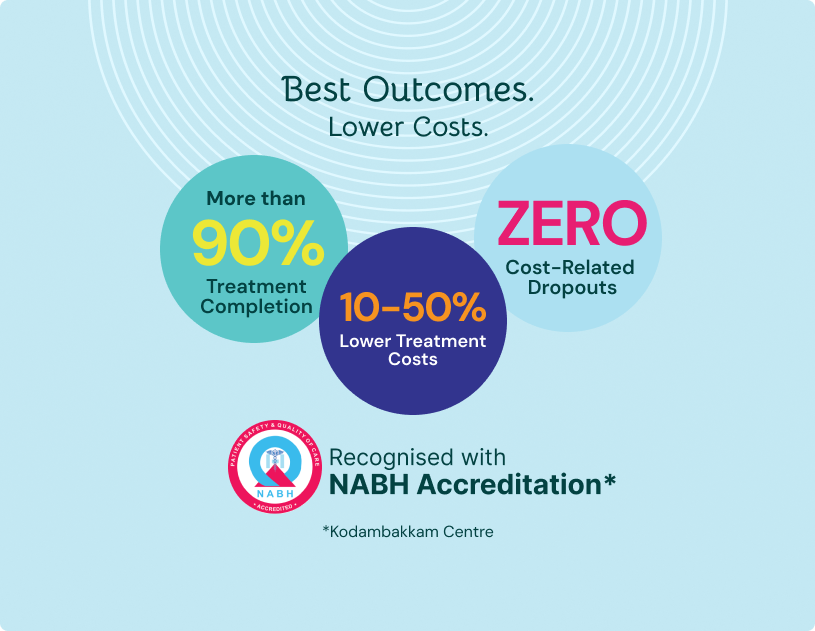
Jus’ Onco offers chemotherapy treatments at rates 10% to 50% lower than multi-specialty corporate hospitals in city areas

What Our Patients Say

Proven through the lives of patients and families we've supported.

Abilash Jose

same-day discharge, zero hospital admission, full clinical supervision. Specialist oncology nurses monitor every session to manage side effects in real time. Our day care model is why Jus' Onco achieves the highest treatment completion rates in India.

★★★★★

Manimegalai K

Advanced immunotherapy that strengthens your immune system to fight cancer cells — delivered under expert oncologist supervision at low cost. Eligibility is assessed based on your cancer type and biomarker profile. A powerful, increasingly effective option for many hard-to-treat cancers.

★★★★★

Chandrasekar D

Precision cancer medicines designed around your specific cancer type and genetic profile — for better outcomes with fewer side effects. Unlike conventional chemotherapy, targeted therapy attacks cancer cells at the molecular level. Delivered in the same safe, supervised day care setting.

★★★★★

Lakshmi Narayanan

Expert oncology consultation for diagnosis, treatment planning, and second opinions — unhurried, thorough, and patient-focused. Our oncologists review your complete medical history before every appointment. You leave every consultation with a clear, personalized treatment plan.

★★★★★

Senthil Kumar R

Dedicated specialist consultations across surgical oncology, radiation oncology, and medical oncology — personalized to your diagnosis. Every specialist works as part of one coordinated oncology team. No referrals lost between departments, no repeated paperwork.

★★★★★

Venkatesh

Preventive cancer vaccination services — including HPV and Hepatitis B vaccines — to reduce long-term cancer risk. Recommended as part of routine cancer prevention for eligible age groups. Administered safely by our trained clinical staff.

★★★★★

Frequently Asked Questions

Soft tissue and bone cancers — collectively called sarcomas — are malignant tumours arising from connective tissues including muscles, fat, blood vessels, nerves, tendons, and bone. The exact cause of most sarcomas is unknown, but risk factors include certain genetic syndromes (Li-Fraumeni syndrome, neurofibromatosis, hereditary retinoblastoma), prior radiation therapy, certain chemical exposures, and chronic lymphedema. Most sarcomas arise sporadically without a clear identifiable cause. At Jus’ Onco, our oncologists assess your individual history and molecular profile during your first consultation.

Early warning signs include a growing lump or swelling in soft tissue or near a bone, persistent bone pain — particularly at night or with activity — a bone that fractures unexpectedly with minimal trauma, joint swelling or limited range of motion, and in children limping or refusal to use a limb. Because sarcomas are rare, symptoms may initially be attributed to injury or benign conditions — making specialist oncology evaluation important for any persistent or unexplained lump or bone pain.

Sarcoma diagnosis at Jus’ Onco involves a thorough review of clinical symptoms, imaging (MRI, CT, PET, bone scan), expert pathological review of biopsy specimens, and comprehensive molecular testing — including KIT and PDGFRA mutations for GIST, EWSR1 fusion for Ewing sarcoma, SS18-SSX for synovial sarcoma, CDK4/MDM2 amplification for liposarcoma, and PD-L1 expression. Your oncologist reviews all findings before recommending a personalized treatment plan.

Jus’ Onco offers day care chemotherapy (MAP protocol for osteosarcoma, doxorubicin plus ifosfamide for soft tissue sarcomas, multiagent chemotherapy for Ewing sarcoma), targeted therapy (imatinib for GIST, denosumab for GCTB, pazopanib for advanced soft tissue sarcoma), immunotherapy for eligible sarcoma subtypes, supportive and rehabilitation care, and coordination of surgical and radiation oncology referrals — all as part of a personalized sarcoma treatment plan.

Yes. Soft tissue and bone cancer chemotherapy at Jus’ Onco is delivered in a calm, private, clinically supervised day care setting — patients receive their full infusion and return home the same day. No hospital admission. No overnight stays. No unnecessary disruption to daily life.

The number of chemotherapy cycles depends on the sarcoma type, grade, stage, and treatment protocol. Osteosarcoma typically requires 6 cycles of MAP chemotherapy — 3 before surgery and 3 after. Ewing sarcoma requires intensive multiagent chemotherapy over 6 to 12 months. Your Jus’ Onco oncologist will map out a clear, complete treatment schedule from your first consultation.

Book Appointment

Book Your Consultation — Best Chemotherapy in India & Best Cancer Care Services at Jus’ Onco


    Your information is kept completely confidential.